Home Loan Balance Transfer Guide for Hoskote Apartment Buyers 2026
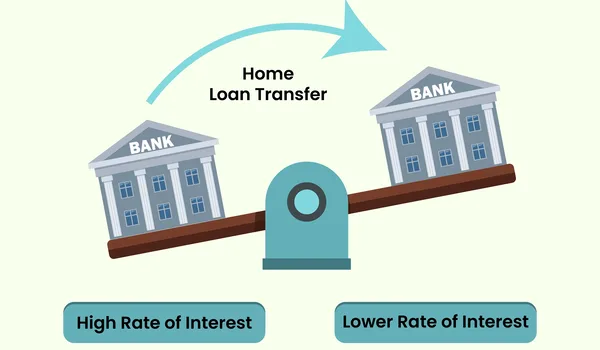
A home loan balance transfer (BT) is one of the most impactful financial decisions a borrower can make mid-loan. If you took a home loan for an apartment in Hoskote at a time when interest rates were higher and your current lender has not reduced your rate to reflect subsequent RBI rate cuts, switching your outstanding loan to a new lender at a lower rate can save Rs 2 to Rs 5 lakh or more in total interest on a typical Rs 50 to Rs 70 lakh Hoskote apartment loan. This guide explains when a balance transfer makes sense, how to calculate your savings, what documents you need and how to complete the process from application to disbursement.
What Is a Home Loan Balance Transfer?
A home loan balance transfer means closing your existing home loan with your current lender by paying the outstanding principal using a new loan from a different lender, typically at a lower interest rate. The new lender disburses the amount directly to your existing lender to foreclose the old loan, and you then repay the new lender at the lower rate. The property documents that were held by your old lender are transferred to the new lender as security.
A BT is not the same as taking a new loan on a new property. You are refinancing an existing loan on a property you already own or are purchasing. The new lender assesses the property valuation, your repayment track record with the existing lender and your current income before approving the BT.
When Does a Balance Transfer Make Financial Sense?
A balance transfer is worth doing when the following conditions are met:
- Rate difference of at least 0.5 percent: Below 0.5 percent, the processing fee and time cost of the BT process typically eat up the savings, especially in the early years of the remaining tenure.
- Remaining tenure of at least 5 to 7 years: The interest saving on a BT is front-loaded; most of the benefit comes in the earlier years of the remaining tenure when the outstanding principal is highest. If you have only 2 to 3 years remaining, the saving is modest.
- Outstanding principal above Rs 20 lakh: On smaller outstanding amounts, the absolute rupee saving may not justify the processing time and documentation effort.
- At least 12 months of clean repayment history: Most lenders require a minimum repayment period with the existing lender before considering a BT, and they check for any missed or delayed EMIs in your repayment history.
Interest Savings Calculation
The table below illustrates indicative monthly EMI savings and total interest savings for different outstanding loan amounts when switching from 9.5 percent to 8.75 percent with 15 years remaining. Savings scale proportionally with outstanding principal and remaining tenure.
| Outstanding Loan | Old Rate | New Rate | Monthly EMI Saving | Total Interest Saving (15 years) |
|---|---|---|---|---|
| Rs 30 lakh | 9.5% | 8.75% | ~Rs 1,350 | ~Rs 2.4 lakh |
| Rs 50 lakh | 9.5% | 8.75% | ~Rs 2,250 | ~Rs 4.1 lakh |
| Rs 70 lakh | 9.5% | 8.75% | ~Rs 3,150 | ~Rs 5.7 lakh |
| Rs 30 lakh | 9.5% | 8.50% | ~Rs 1,750 | ~Rs 3.1 lakh |
| Rs 50 lakh | 9.5% | 8.50% | ~Rs 2,900 | ~Rs 5.2 lakh |
| Rs 70 lakh | 9.5% | 8.50% | ~Rs 4,050 | ~Rs 7.3 lakh |
Indicative calculations assuming equal monthly instalments and 15 years remaining tenure. Actual savings depend on exact rate, outstanding principal, tenure and the new lender's processing fee. Use your lender's EMI calculator for a precise figure.
MCLR vs Repo-Rate Linked Loans
Home loans sanctioned before October 2019 were typically linked to the lender's MCLR (Marginal Cost of Funds based Lending Rate). MCLR-linked rates reset periodically (quarterly, semi-annually or annually depending on your loan agreement) but tend to lag behind RBI rate movements and can be stickier on the downside than repo-rate linked loans.
Since October 2019, RBI mandated that all new floating-rate retail loans must be linked to an external benchmark, in practice the RBI repo rate. Repo-rate linked loans reset immediately when the RBI changes the repo rate, giving borrowers faster pass-through of rate cuts. If you are on an older MCLR-linked loan and the repo has fallen since your last MCLR reset, you may be paying a higher effective rate than a borrower on a current repo-linked loan from the same lender. This is one of the most common BT triggers for Hoskote buyers who took loans in 2018 to 2022.
Pre-Payment Penalty: What the RBI Rules Say
RBI regulations prohibit banks from charging any pre-payment penalty on floating-rate home loans. This means your existing lender cannot levy a penalty when you foreclose your loan via a balance transfer, as long as your loan is on a floating rate. Most home loans in India are floating-rate, so the majority of borrowers will not face a prepayment charge.
Fixed-rate loans are not covered by this prohibition and your loan agreement may specify a prepayment charge, typically 2 to 4 percent of the outstanding principal. Check your original loan sanction letter and loan agreement to confirm your rate type before initiating a BT.
Processing Fee vs Savings Math
The new lender will charge a processing fee for the BT, typically 0.25 to 1 percent of the outstanding loan amount (Rs 7,500 to Rs 30,000 on a Rs 30 lakh outstanding; Rs 12,500 to Rs 50,000 on a Rs 50 lakh outstanding). You may also incur a nominal legal and technical valuation fee from the new lender. Compare the total one-time BT cost against your projected annual interest saving to determine the payback period. A BT that costs Rs 30,000 in total and saves Rs 2,500 per month in EMI pays back in 12 months; the remaining years of saving are pure financial benefit.
Some lenders offer zero-processing-fee BT campaigns during festive quarters or when they are actively building their home loan portfolio. Monitoring these offers and timing the BT to coincide with such campaigns can further improve the net saving.
Eligibility for a Balance Transfer
To qualify for a balance transfer at the best rate, you typically need:
- A CIBIL or Experian credit score of 750 or above (scores between 700 and 750 may still qualify at a marginally higher rate).
- A minimum of 12 months of on-time EMI repayments with the existing lender, with no missed or overdue payments.
- Stable income documentation: 3 months salary slips and Form 16 for salaried borrowers; 2 years ITR with P&L and balance sheet for self-employed borrowers.
- A property that has a clear legal title, is RERA-registered and is not under any legal dispute or encumbrance.
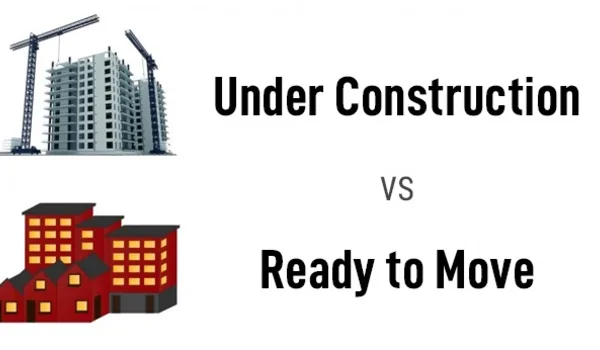
- For under-construction properties: most lenders will process a BT only after the project reaches a stage where the new lender is comfortable with the security. Fully constructed or possession-ready properties have a smoother BT process.
For Hoskote apartment buyers, projects by branded developers are typically pre-approved with multiple lenders, which simplifies the technical and legal evaluation at the new lender side. Verify the RERA status of your project on the K-RERA portal and ensure all approvals are in order before initiating a BT.
Documents Needed for a Home Loan Balance Transfer
| Document Category | Specific Documents |
|---|---|
| KYC | Aadhaar card, PAN card, passport-size photographs |
| Income (salaried) | Last 3 months salary slips, latest Form 16, 6 months bank statements (salary account) |
| Income (self-employed) | Last 2 years ITR with acknowledgement, CA-certified P&L and balance sheet, 12 months business bank statements |
| Existing loan | Loan account statement (12 months), outstanding principal certificate, foreclosure letter from existing lender, original sanction letter |
| Property | Registered sale deed, OC or CC, approved building plan, RERA registration certificate, encumbrance certificate (EC), property tax receipts |
| New lender application | Duly filled application form, processing fee cheque or payment, consent to credit enquiry |
Step-by-Step Balance Transfer Process
- Step 1: Compare offers. Get BT rate quotes from at least 3 lenders. Banks, housing finance companies (HFCs) and online aggregators can be used for comparison. Focus on the effective interest rate (EIR), not the headline rate.
- Step 2: Apply to the new lender. Submit the BT application with all required documents. The new lender conducts a credit check, income assessment and property technical and legal evaluation.
- Step 3: Receive sanction letter. The new lender issues a sanction letter specifying the loan amount, rate, tenure and EMI. Review it carefully before accepting.
- Step 4: Request foreclosure letter from existing lender. Apply for a foreclosure letter and outstanding principal certificate from your current lender. This typically takes 5 to 10 working days.
- Step 5: New lender disburses to existing lender. The new lender issues a demand draft or banker's cheque payable to your existing lender, which is used to close the old loan.
- Step 6: Property document transfer. Once the existing loan is closed, your existing lender releases the original property documents. These are collected by the new lender's representative and held as security against the new loan.
- Step 7: Begin repaying the new lender. Set up a standing instruction for EMI payment to the new lender. The first EMI is typically due one month after disbursement.
Featured Hoskote Projects
Prestige Hoskote
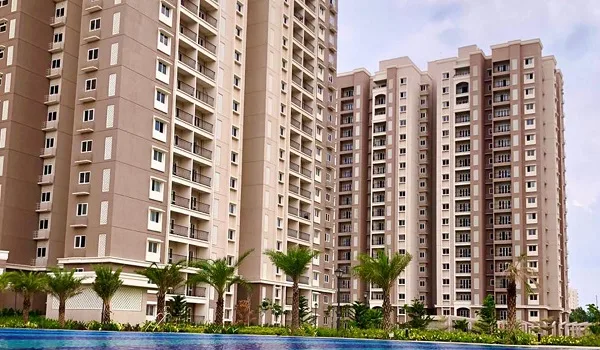
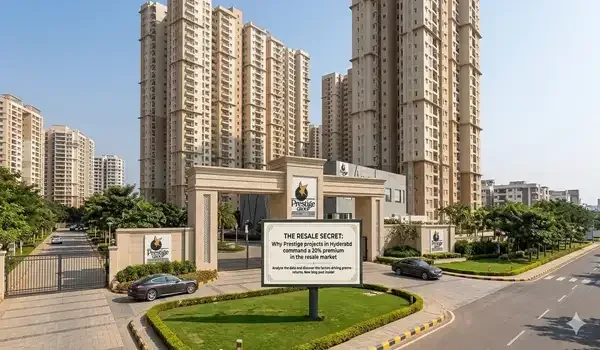
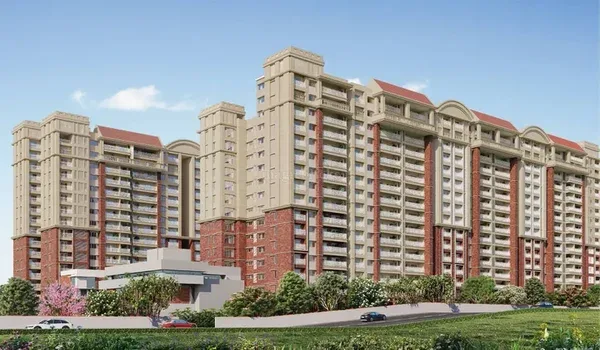
Prestige Hoskote on NH-75 is the flagship township project by Prestige Group. As a RERA-registered project by a nationally recognized developer, Prestige Hoskote is pre-approved with most major banks and housing finance companies, which means that if you are considering a balance transfer on an existing Prestige Hoskote loan, the new lender's technical and legal evaluation process is typically faster and more straightforward. Review the floor plans, check the price, explore the location and book a site visit.
Sobha One World

Sobha One World on the NH-75 belt is a RERA-registered project by Sobha Ltd, a developer with a strong lender-approval track record. For buyers who have taken a Sobha One World home loan and are considering a balance transfer, the project's Sobha brand and RERA compliance makes lender-switching administratively straightforward.
Godrej Parkshire

Godrej Parkshire by Godrej Properties on the NH-75 belt benefits from Godrej's established RERA track record and broad lender network. Buyers planning a future balance transfer on a Godrej Parkshire loan will find that the developer's credentials make lender evaluation at the new lender side faster and more straightforward than for projects from smaller or lesser-known developers.
Confident Cygnus
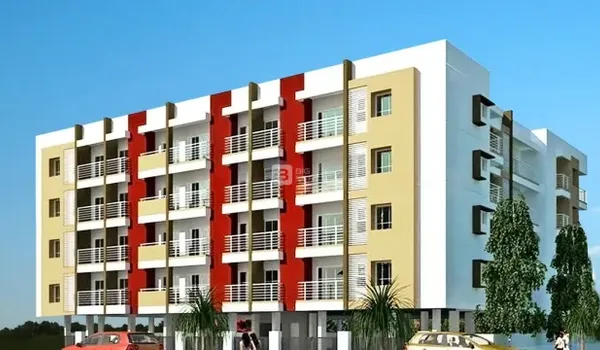
Confident Cygnus is the ready-to-move option in Hoskote. For buyers who took a home loan on Confident Cygnus, the project is a completed and occupied gated community, which makes the balance transfer property evaluation straightforward: the new lender's technical team can physically inspect a completed property rather than assessing an under-construction project on plan.
Sowparnika Purple Rose
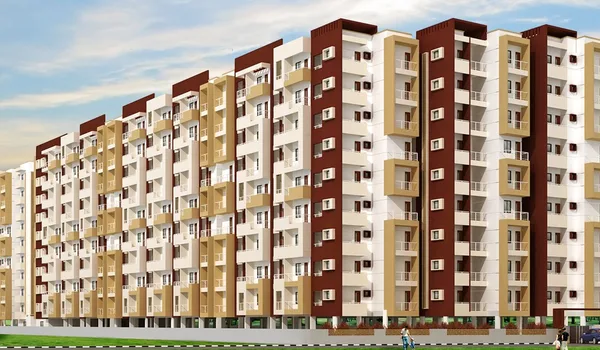
Sowparnika Purple Rose serves the value segment in Hoskote. For buyers with smaller outstanding loan amounts, the interest-saving math for a balance transfer requires careful calculation: on a Rs 20 to Rs 30 lakh outstanding, the total saving from a 0.5 percent rate improvement over 10 years is approximately Rs 1.5 to Rs 2.5 lakh, which comfortably clears a typical Rs 10,000 to Rs 20,000 processing fee on a smaller loan.
Summary
A home loan balance transfer is worth doing when the rate difference is 0.5 percent or more, your remaining tenure is at least 5 to 7 years and your outstanding principal is meaningful. The RBI prohibition on prepayment penalties for floating-rate loans removes the main cost barrier. For Hoskote apartment buyers, RERA-registered projects from branded developers simplify the new lender's property evaluation. Consult a chartered accountant or loan advisor to confirm the exact savings in your specific case before proceeding.
Frequently Asked Questions
1. What is a home loan balance transfer and when should I consider it?
A BT moves your outstanding loan to a new lender at a lower rate; consider it when the rate difference is 0.5 percent or more, remaining tenure is at least 5 to 7 years and outstanding principal is above Rs 20 lakh.
2. How much can I save by transferring my home loan to a lower rate?
On a Rs 50 lakh outstanding with 15 years remaining, switching from 9.5 percent to 8.75 percent saves approximately Rs 2,250 per month in EMI and around Rs 4 lakh in total interest over the remaining tenure.
3. Can a lender charge a prepayment penalty when I transfer my home loan?
No. RBI rules prohibit banks from charging a prepayment penalty on floating-rate home loans. Most home loans are floating-rate, so you can transfer without a penalty; check your loan agreement to confirm your rate type.
4. What credit score is needed for a home loan balance transfer?
A CIBIL score of 750 or above and at least 12 months of on-time EMI repayments with your existing lender are the typical minimum requirements for a smooth BT approval at the best rate.
5. What documents are needed for a home loan balance transfer?
KYC, income proof (salary slips or ITR), 12 months loan account statement, foreclosure letter from your existing lender, and property documents including the sale deed, OC or CC and RERA certificate.
6. Is a home loan balance transfer worth it for a Hoskote apartment loan?
Yes, if the rate difference is 0.5 percent or more and 7 to 8 years of tenure remain; for a Rs 60 to Rs 80 lakh loan typical of a Hoskote 3 BHK, the interest saving will substantially exceed the processing fee.
Prestige Hoskote Blog