Joint Home Loan & Co-Borrower Guide for Hoskote 2026

Buying an apartment in Hoskote on a single income can limit how much you can borrow, and limit the tax savings you can claim each year. A joint home loan, where two people borrow together and share ownership, solves both problems simultaneously: it pools two incomes for a higher loan amount and gives both co-borrowers independent access to Section 80C and Section 24b deductions on the same property. For a dual-income household buying a ₹70–80 lakh apartment in a branded project like Prestige Hoskote, the annual tax saving from a well-structured joint loan can exceed ₹1.5 lakh compared with a sole-borrower purchase. This guide explains who qualifies as a co-borrower, how income clubbing works in practice, what tax deductions each co-borrower can claim, and the Karnataka-specific stamp duty angle that a woman co-owner unlocks.
Who Can Be a Co-Borrower?
Most Indian banks and housing finance companies, SBI, HDFC Bank, ICICI Bank, Axis Bank, LIC Housing Finance, Bajaj Housing Finance, accept the following relationships as eligible co-borrowers:
- Spouse: The most common and most straightforward. A spouse's income is fully clubbed and the relationship is accepted without additional conditions by all lenders.
- Parent: Accepted by most lenders. A critical caveat: if the parent is close to retirement age, the lender will limit the loan tenure to end by the parent's retirement, which shortens the tenure and increases the EMI. An earning parent co-borrower in their 40s is treated differently from one in their 50s.
- Adult child: Accepted when the child is salaried or self-employed. A son or daughter who is earning is a clean co-borrower for parents who want to club income.
- Sibling: Accepted by some lenders (SBI, LIC HFL) but not all. The lender may also require that both siblings are co-owners of the property.
Friends, business partners and unrelated persons are not accepted as co-borrowers by any mainstream Indian bank. The relationship requirement is firm.
How Income Clubbing Works: What You Can Actually Borrow
When two co-borrowers apply together, the lender adds their net monthly incomes (after deducting PF, professional tax and existing EMIs) to arrive at the combined income basis. Most banks then apply a multiplier of 5 to 6 times the annual combined net income, adjusted for the loan tenure and the FOIR (Fixed Obligation to Income Ratio, typically capped at 50 to 55 percent of combined take-home). The result is a meaningfully higher loan ceiling than either borrower could achieve alone.
| Scenario | Monthly Net Income | Approx. Loan Eligibility (50% FOIR, 20-year tenure) |
|---|---|---|
| Sole borrower A | ₹1,00,000 | ~₹55–65 lakh |
| Sole borrower B | ₹60,000 | ~₹33–40 lakh |
| Joint A + B | ₹1,60,000 combined | ~₹88–1.00 crore |
Figures indicative, as of July 2026, actual eligibility depends on each lender's policy, the co-borrowers' CIBIL scores, existing obligations and project RERA status.
One important constraint: the lender uses the lower of the two co-borrowers' CIBIL scores as the qualifying score in most cases. A co-borrower with a CIBIL score below 700 can drag the application into a higher interest rate bracket or cause rejection even if the primary borrower's score is 780+. Both co-borrowers should check their CIBIL scores before applying and resolve any derogatory marks.
Tax Benefits: Section 80C and Section 24b for Each Co-Borrower
This is the most powerful reason to structure a joint home loan correctly. Under the Income Tax Act 1961, a co-borrower who is also a co-owner can independently claim:
- Section 80C: Up to ₹1.5 lakh per year for home loan principal repayment (under the old tax regime, within the overall ₹1.5 lakh 80C basket that also includes PPF, ELSS, LIC premium, etc.).
- Section 24b: Up to ₹2 lakh per year for interest paid on a self-occupied residential property (old regime only).
For a joint loan, both co-borrowers claim these deductions independently, each on their proportionate share of EMI repayment. The household total is therefore up to ₹3 lakh per year on principal (80C) and up to ₹4 lakh per year on interest (24b), double the sole-borrower limit. At a 30 percent tax slab, ₹4 lakh of Section 24b deductions save ₹1.2 lakh in tax annually.
The Critical Rule: Co-Borrower Must Also Be Co-Owner
The Income Tax Act requires that a claimant of Section 80C principal and Section 24b interest deductions must be both a co-borrower (on the loan) and a co-owner (named in the property's sale deed registered with the sub-registrar). Being only a co-borrower, someone who pays EMI but is not on the property title, gives zero tax deduction even though their income services the loan. Being only a co-owner, named in the sale deed but not on the loan, also gives zero tax deduction.
To get the full household tax benefit, both people must appear in both documents: the loan sanction letter and the registered sale deed. When buying in Hoskote, coordinate with your property lawyer to ensure the sale deed reflects both parties as co-owners in the agreed ownership ratio before registration. Banks require all co-owners to be co-borrowers; they do not always enforce the reverse, so it is up to you to ensure co-borrowers are also recorded as co-owners in the property documents.
Karnataka Stamp Duty Rebate for Women Co-Owners
Karnataka offers a 1 percent stamp duty concession when a woman is the sole owner or the primary buyer (first named in the sale deed) of a residential property. The standard stamp duty in Karnataka is 5 percent on properties above ₹45 lakh; a woman-primary buyer pays 4 percent. For a ₹75 lakh apartment in Hoskote, this saves ₹75,000, significant enough to factor into the decision on how to structure the sale deed. Check the K-RERA portal to verify the project registration status and confirm stamp duty slabs with your property lawyer at the time of registration, as slabs and rates may be revised.
The tax-benefit and stamp-duty angles together make a strong case for naming the wife as the first owner in the sale deed in a dual-income household: she claims full Section 24b and 80C deductions on her share, the household saves 1 percent stamp duty, and her income addition to the joint loan may have unlocked a larger loan amount in the first place.
Joint Loan Documentation Checklist
| Document | Primary Borrower | Co-Borrower |
|---|---|---|
| Identity proof (Aadhaar / PAN / Passport) | Required | Required |
| Address proof | Required | Required |
| Last 3 months salary slips | Required (salaried) | Required (salaried) |
| Last 2 years ITR with computation | Required | Required |
| Last 6 months bank statements | Required | Required |
| Form 16 (last 2 years) | Required (salaried) | Required (salaried) |
| CIBIL / credit report | Lender pulls directly | Lender pulls directly |
| Relationship proof (marriage certificate / birth certificate) | May be required | May be required |
| K-RERA registration number of property | Required for both, verify at rera.karnataka.gov.in | |
| Sale agreement / allotment letter | Required for both, from the developer | |
Hoskote Projects Well-Suited to Joint Home Loan Buyers
Prestige Hoskote
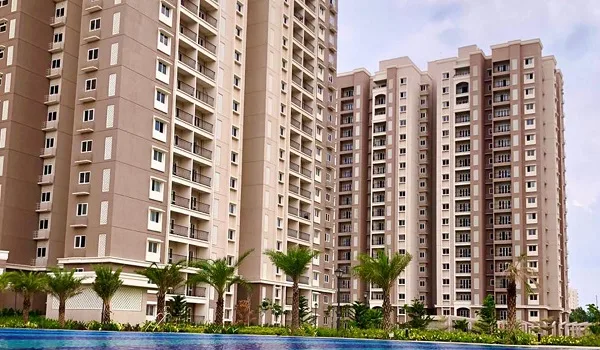
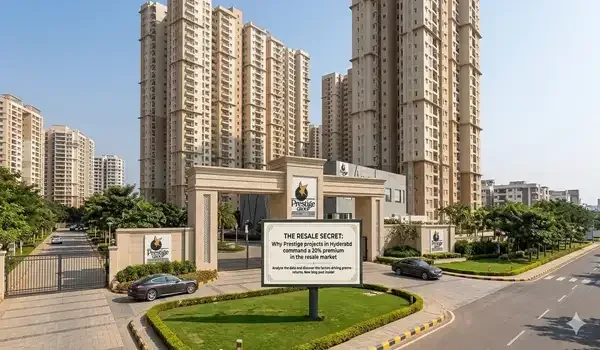
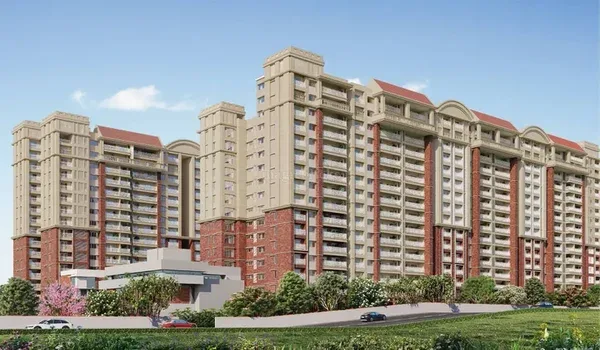
Prestige Hoskote is a flagship pre-launch township from Prestige Group on the Dalasagere belt off NH-75. The 2 and 3 BHK ticket sizes (estimated ₹70–90 lakh range at launch) are a natural fit for a dual-income household using a joint loan, combining two Bengaluru salaries to unlock eligibility for a branded township apartment that either income alone may not reach. The RERA registration, when in process, will be verifiable on K-RERA. Review floor plans, price and location before your site visit.
Sobha One World

Sobha One World is the in-house-build alternative for buyers who want Sobha's precision construction with a branded lender's backing. Sobha's strong developer credibility with major banks, SBI, HDFC, ICICI, means pre-approved home loan tie-ups are commonly available at Sobha projects, which can simplify processing for a joint loan application. Its differentiator: in-house contracting reduces construction risk, which is a factor lenders weigh for pre-launch projects. Trade-off: priced at the upper end of the Hoskote brand range, so the income-clubbing advantage is most impactful here.
Godrej Parkshire

Godrej Parkshire brings Godrej's design-led community planning to the Hoskote belt. Like other Godrej projects nationally, it is likely to have pre-approved loan tie-ups with leading banks, a convenience for joint borrowers who want a faster processing track. A 2 BHK at Parkshire is a clean joint-loan purchase for a household targeting the Section 24b doubling, both co-borrowers claiming ₹2 lakh each in annual interest deductions over a 15 to 20 year loan tenure generates substantial household tax savings.
Confident Cygnus
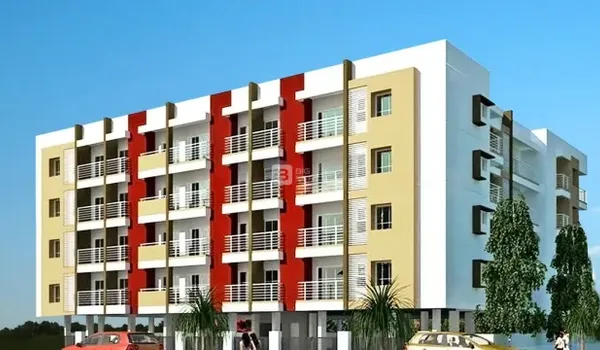
Confident Cygnus is an established, ready community, which means lenders can disburse the full loan amount on registration rather than in tranches against construction milestones. For a joint home loan buyer who wants immediate full disbursement (and therefore immediate full interest deduction under Section 24b from day one), a ready project like Confident Cygnus has a structural advantage over pre-launch options where interest on partial disbursements during the construction period is classified as pre-EMI interest (deductible in 5 equal installments post-handover under the old rule, not immediately).
Sowparnika Purple Rose
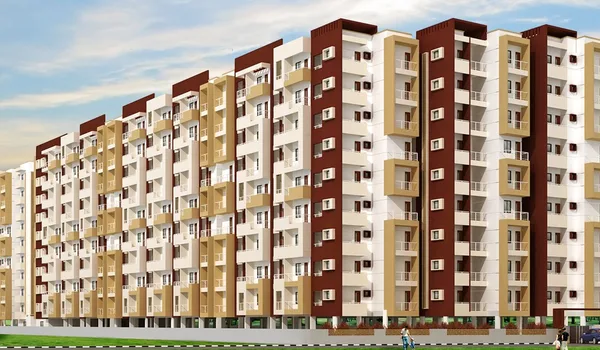
Sowparnika Purple Rose is the entry-level joint-loan option in Hoskote. At the affordable-to-mid segment, the ticket size is lower, meaning the income-clubbing requirement is less demanding and the joint loan is achievable even for two mid-income earners rather than requiring two high-income salaries. For a couple where the combined monthly take-home is ₹80,000 to ₹1,20,000 and the target is a gated apartment in Hoskote within Karnataka's K-RERA framework, Purple Rose is the practical starting point to evaluate.
Before You Apply: A Joint Loan Checklist
- Both co-borrowers: check CIBIL score (target 750+). Resolve derogatory marks before applying.
- Decide ownership ratio in the sale deed, it must align with how you will split EMI payments to claim proportionate tax deductions.
- Confirm the project's K-RERA registration number before signing the agreement to sell.
- If the wife is the first-named owner, confirm Karnataka's 1% stamp duty concession applies to your transaction value and property type with the sub-registrar office before registration day.
- Both co-borrowers should confirm they are in the old tax regime before claiming 80C and 24b, these deductions are unavailable in the new regime.
- For pre-launch/under-construction projects: understand that loan disbursement is in tranches; interest during the construction period is pre-EMI interest (claim in 5 equal parts post-handover under old rules, confirm current treatment with a CA).
If your household is ready to buy in Hoskote with a joint loan, book a site visit at Prestige Hoskote to get the current cost sheet and discuss the home loan tie-up options available at the project.
Frequently Asked Questions
1. Who can be a co-borrower in a joint home loan in India?
Most banks accept a spouse, parent, adult child or sibling as a co-borrower. A spouse is the cleanest option, income is fully clubbed and all lenders accept the relationship. Friends or unrelated persons are not accepted by any mainstream Indian bank.
2. How does income clubbing work for a joint home loan?
The lender adds both co-borrowers' net monthly incomes to calculate combined eligibility, typically 5 to 6 times annual combined net income, subject to FOIR limits of 50 to 55%. The lower CIBIL score of the two co-borrowers is the qualifying score, so both should be above 750 before applying.
3. What is the tax benefit of a joint home loan under Section 80C and Section 24b?
Each co-borrower who is also a co-owner can independently claim up to ₹1.5 lakh per year under Section 80C (principal) and up to ₹2 lakh per year under Section 24b (interest), doubling the household deduction to ₹3 lakh + ₹4 lakh versus a sole-borrower loan. Both deductions are available only under the old tax regime.
4. Does Karnataka offer a stamp duty rebate for women co-owners?
Yes, Karnataka allows a 1% stamp duty concession when a woman is the sole owner or first-named buyer. On a ₹75 lakh property, this saves ₹75,000. Confirm the current slab and eligibility with the sub-registrar office or your property lawyer before registration day.
5. What is the difference between a co-borrower and a co-owner in a home loan?
A co-borrower is liable for the loan repayment; a co-owner holds registered ownership rights. To claim Section 80C and 24b deductions, you must be both. Being only a co-borrower (not on the sale deed) or only a co-owner (not on the loan) gives zero tax deduction on that property.
6. Can both co-borrowers claim the home loan tax deduction if one is in the new tax regime?
No, Section 80C and Section 24b deductions are available only under the old tax regime. A co-borrower who has opted for the new regime cannot claim either deduction, even on a jointly held loan. Only the old-regime co-borrower can claim on their proportionate share.
Prestige Hoskote Blog