Property Documents & Legal Checklist for Buying in Hoskote 2026

Before you buy in Hoskote you must verify a specific set of documents — the title or sale deed and its chain of title, an encumbrance certificate, the khata, the project's RERA registration, the approved building plan and the occupancy and commencement certificates, plus tax receipts and any bank or society NOC — because these are what actually prove clean, transferable ownership. Hoskote, on Bengaluru's eastern edge along NH-75, has plenty of genuine, well-approved projects, but it also carries plots that were once farmland and buildings on the B-Khata register, so due diligence here matters more than in an older, fully-formed suburb. This guide is a people-first walk through each document, what it proves and where to check it, so you know exactly what to demand before signing anything.
Think of legal due diligence as separate from the money side. Stamp duty and registration are about cost, the first-time-buyer journey is the umbrella process, and the NRI route adds FEMA rules — this page is only about the paperwork that confirms the property is legally sound. Get these documents wrong and no amount of a good price will protect you; get them right and you can buy with confidence. Read it alongside your own lawyer's advice rather than as a substitute for it.
Title Deed, Sale Deed and the Chain of Title
The sale deed is the core ownership document — it is the registered instrument that transfers the property to the current owner, and it is what will transfer it to you. The title deed establishes who legally holds the property today. Above both sits the mother deed, the parent document that traces the property back through every earlier owner. Reading the mother deed together with each subsequent sale deed gives you the chain of title, an unbroken line of ownership from the original holder to the person selling to you. Any missing link, unexplained gap or overwriting in that chain is a red flag your lawyer must resolve before you proceed.
In Hoskote, where many layouts were carved out of larger revenue parcels near the sub-registrar Hoskote jurisdiction, a clean chain of title matters especially. Ask for certified copies of the mother deed and all prior sale deeds, not just the seller's own purchase document, and have a property lawyer confirm the names, extents and survey numbers match across each generation. A title that reads cleanly for the last thirty years is what banks and courts respect.
Encumbrance Certificate (EC)
An encumbrance certificate is your proof that the property is free of hidden debts. It is a record from the sub-registrar of every transaction registered against the property over a chosen period — sales, mortgages, gifts and court charges — so it reveals whether the seller has pledged the flat against a loan or whether there is any registered dispute. Buyers typically pull an EC covering the last thirteen to thirty years, either from the Hoskote sub-registrar office or through the state's Kaveri online service, and read it alongside the title documents.
If the EC shows an existing mortgage, that is not necessarily a deal-breaker — many sellers are still repaying a home loan — but it means the loan must be closed and the charge released before or at the time you buy, with a no-dues letter from the bank. A clean, up-to-date EC that matches the title chain is one of the strongest signals that the paperwork is genuine.
Khata: A-Khata vs B-Khata and Khata Transfer
The khata is the municipal account that records a property for tax purposes and identifies its owner. In Karnataka the crucial distinction is A-Khata versus B-Khata. An A-Khata property sits on the main register as a fully legal, tax-compliant asset that can be freely sold, transferred and mortgaged. A B-Khata property is on a separate list for units with some deviation or pending regularisation; banks are frequently reluctant to lend against B-Khata, and building or reselling can be harder. Around Hoskote, where the Hoskote Town Municipal Council (TMC) and BMRDA govern different pockets, always establish which khata a property holds.
Prefer A-Khata wherever you can. If a property is B-Khata, understand the regularisation or khata-transfer path, the cost and the risk before you commit, and factor that into your decision and your price. On any purchase, the khata must also be transferred into your name after registration, so budget the khata-transfer fee and confirm the latest tax paid receipts are clear up to the current year.
RERA Registration Verification
For any under-construction or newly launched apartment, the project's RERA registration is non-negotiable. Registration means the promoter has filed the approved plans, the land title, the promised completion date and quarterly progress with the regulator, and it gives you legal recourse if the builder defaults. Verify it yourself on the K-RERA portal by searching the project name, the builder or the registration number, and confirm the details match exactly what the seller tells you.
The portal also lists any complaints against the promoter and shows whether the registration is current, so it is the single best public check before you pay an advance on a Hoskote project. If a project claims RERA approval but you cannot find it on the portal, treat that as a serious warning and pause until it is resolved. A genuine registration number should always be printed in the builder's brochures and agreements.
Approved Building Plan, Commencement and Occupancy Certificates
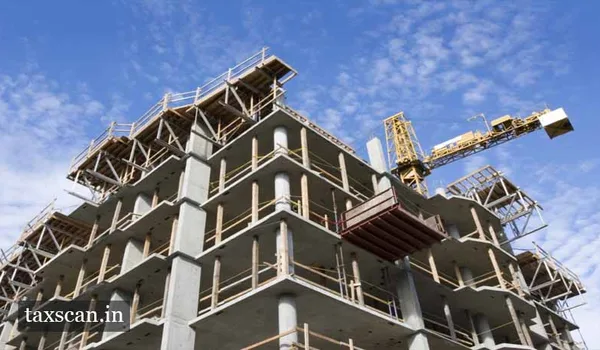
Three approvals prove a building is legal. The sanctioned building plan is the layout approved by the local planning authority; construction must match it, floor for floor. The commencement certificate (CC) confirms the authority permitted work to begin. The occupancy certificate (OC) is issued at the end, certifying the finished building complies with the approved plan and is fit to occupy. For a ready flat, the OC is the document that matters most — buying without it risks penalties, water and power connection problems and trouble at resale.
Ask to see the sanctioned plan and compare it with what has actually been built, then confirm the CC exists for an under-construction purchase and that the OC is issued before you take possession of a completed home. Deviations between the plan and the built structure are exactly what pushes a property onto the B-Khata register, so these certificates and the khata question are closely linked.
DC Conversion for Former Agricultural Land
Much of the land along the NH-75 / Old Madras Road corridor around Hoskote and near the KIADB industrial belt was originally agricultural. Farmland cannot legally be used for a residential building until it has been converted to non-agricultural use through a DC conversion order issued by the deputy commissioner. Buying a home on land that was never converted invites future legal and demolition risk, so for any project on former agri land, the conversion certificate is essential.
Ask for the DC conversion order and check that the survey numbers on it match the title, the khata and the RERA filing. For an apartment in a well-documented gated project the builder should hold this in the approval file; for a plot or an independent house, insist on seeing the original order. Your lawyer will confirm the conversion covers the full extent you are buying.
Tax Paid Receipts and NOCs
Two supporting documents round out the file. Up-to-date property tax paid receipts prove the current owner has cleared dues to the municipal body, and any arrears become your problem after purchase, so confirm the tax is paid to the current year. Where the seller has an outstanding home loan, you need a no-objection certificate (NOC) and a loan-closure letter from their bank confirming the charge is released; where the property is inside a society or association, an NOC from that body confirms there are no pending maintenance dues or transfer objections.
For an under-construction purchase, keep the distinction between the sale agreement and the sale deed clear. The sale agreement records the terms, the payment schedule and the promise to sell; the sale deed is the final registered transfer that actually makes you the owner. Read the agreement carefully, because its clauses on delays, cancellation and possession bind you long before the deed is signed.
Applying the Checklist to Hoskote's Leading Projects
The same checklist applies to every purchase, but how each item plays out depends on the project's stage. Here is how title, khata, RERA and OC diligence maps onto four of the corridor's leading branded names — verify each document yourself rather than relying on marketing.
Prestige Hoskote
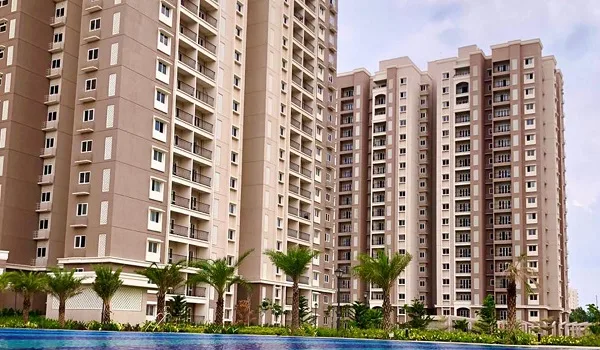
Prestige Hoskote is a pre-launch gated township at Dalasagere off NH-75 with 2, 3 and 4 BHK homes from Prestige Group. Because it is pre-launch, the priority checks are the RERA status — its K-RERA registration is in process, so confirm the number on the portal once it is published — and the land title and DC conversion on the township parcel. A branded developer usually keeps the mother deed, sanctioned plan and conversion order in order, but you should still read the sale agreement and confirm the approved plan before you book. Review the floor plans and current price before you visit.
Sobha One World

Sobha One World is a new-launch township in the Hoskote area offering 1, 2, 3 and 4 BHK apartments with possession around 2031. For a project this early, your diligence centres on the RERA registration and the promised completion date on the K-RERA portal, the approved building plan and the commencement certificate, and the payment schedule written into the sale agreement. Because possession is years away, the occupancy certificate does not exist yet — so the agreement's clauses on delay and default are what protect you until the building is finished and the OC is issued.
Godrej Parkshire

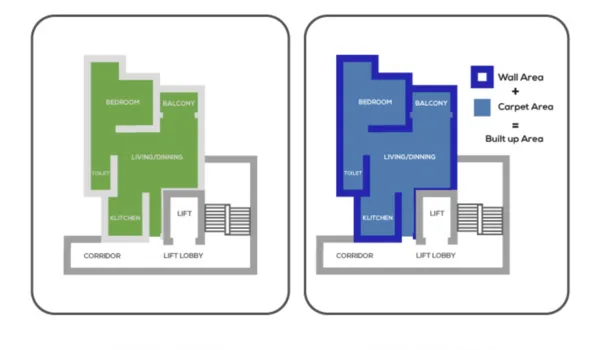
Godrej Parkshire is an upcoming Hoskote project with 2, 3 and 4 BHK homes of roughly 1,150 to 1,750 sq ft. As an under-construction launch, the same order applies: verify the RERA registration, read the sanctioned plan against the marketed layout, and confirm the land title and khata position on the parcel. Match the exact carpet and super-built-up areas in the sale agreement against the plan so the size you pay for is the size that is approved, and keep the commencement certificate on file until the occupancy certificate is granted at handover.
Birla Hoskote

Birla Hoskote is a Birla Estates project on the corridor, and it carries the same document set as any branded launch. Run the RERA search on the portal to confirm registration, ask for the mother deed and chain of title on the land, and — because parcels here were often agricultural — confirm the DC conversion order covers the full extent. For any completed phase, the occupancy certificate is the document that lets you take clean possession; for an under-construction phase, the commencement certificate and a carefully read sale agreement are your safeguards until then.
Hoskote Property Documents Checklist 2026
| Document | What it proves | Where to get it / verify |
|---|---|---|
| Sale deed & title deed | Current legal ownership and transfer to you | Seller's copy; verify at sub-registrar Hoskote |
| Mother deed & prior deeds | Unbroken chain of title back to origin | Certified copies; lawyer title search |
| Encumbrance certificate (EC) | Property free of loans, mortgages, charges | Hoskote sub-registrar / Kaveri online (13–30 yrs) |
| Khata (A-Khata preferred) | On municipal register; legal, transferable, loanable | Hoskote TMC / BMRDA; check A vs B |
| RERA registration | Project filed and regulated; recourse on default | K-RERA portal by name / number |
| Sanctioned plan + CC + OC | Building is approved, legal and fit to occupy | Planning authority; builder approval file |
| DC conversion order | Former agri land converted to residential use | Deputy commissioner's office |
| Tax paid receipts & NOCs | Dues cleared; loan / society objections released | Municipal body; seller's bank / society |
Charges and rules indicative, as of June 2026 — confirm the latest requirements with a property lawyer or the sub-registrar office.
Your Step-by-Step Verification Path
Put the documents in a sensible order and the process becomes manageable. Start with the title: read the sale deed and the mother deed and satisfy yourself the chain of title is unbroken. Next pull a fresh encumbrance certificate to confirm there are no undisclosed loans or charges. Then settle the khata question — confirm A-Khata or understand the B-Khata path — and check tax is paid to date. For an under-construction flat, verify the RERA registration on the portal and read the sale agreement clause by clause; for a completed one, confirm the occupancy certificate is issued. Where the land was farmland, insist on the DC conversion order, and where a loan exists, get the bank NOC and closure letter.
Run all of this past an independent property lawyer before you pay any advance — the fee is tiny against the price of a home and it is the cheapest insurance you can buy against a title or approval dispute. When you are ready to inspect a project on the ground and see the approval file for yourself, our team can help you compare options and book a site visit so you buy in Hoskote with your eyes open.
Frequently Asked Questions
1. What documents are needed to buy a flat in Hoskote?
You need the title or sale deed, the mother deed showing chain of title, an encumbrance certificate, the khata and latest tax paid receipts, plus the project's RERA registration, approved building plan and the occupancy and commencement certificates. For an under-construction flat you also verify the builder's sale agreement, and for former agricultural land the DC conversion certificate. A property lawyer should review the full set before you pay any advance.
2. What is A-Khata vs B-Khata and why does it matter?
A-Khata means the property is on the main municipal register as a fully legal, tax-compliant asset that can be freely transferred and loaned against. B-Khata is a separate register for properties with some deviation or pending regularisation, and banks are often reluctant to lend on it. In and around Hoskote, always prefer an A-Khata property, and if a unit is B-Khata understand the khata-transfer path and the risk before you commit.
3. How do I verify a project on K-RERA?
Go to the Karnataka RERA portal, search by the project name, builder or registration number, and confirm the registration is valid and matches what the seller claims. The portal shows approved plans, promised completion dates, quarterly progress and any complaints, so it is the single best public check for an under-construction Hoskote project before you pay.
4. Is an encumbrance certificate necessary?
Yes. An encumbrance certificate lists the registered transactions, mortgages and charges on a property over a chosen period, so it proves the property is free of undisclosed loans or disputes. Buyers typically pull an EC covering the last thirteen to thirty years from the Hoskote sub-registrar or the Kaveri online service before completing a purchase.
5. What are the OC and CC and why check them?
The commencement certificate confirms the authority allowed construction to begin, and the occupancy certificate confirms the finished building matches the approved plan and is legally fit to occupy. Buying a flat without an occupancy certificate risks penalties, utility problems and resale difficulty, so always confirm the OC is issued before taking possession of a ready home.
6. Should I hire a lawyer for verification?
Yes, for almost every buyer it is worth it. An independent property lawyer runs the title search, reads the chain of deeds, checks the encumbrance certificate, khata, approvals and RERA status, and flags problems you would miss. The fee is small against the price of a flat, and it is the cheapest insurance against buying into a title or approval dispute.
Prestige Hoskote Blog