Capital Gains Tax & Property Sale Guide for Hoskote 2026
Selling a residential property in Hoskote — or anywhere in Karnataka — triggers a capital gains tax obligation that most sellers underestimate until the sale is done and the chartered accountant sends an unexpected ITR bill. The Union Budget 2024 made this more complicated by changing the long-term capital gains rate and removing the indexation benefit for properties purchased on or after 23 July 2024. Understanding how the tax works, which exemptions are available, and what the buyer's TDS obligation means for your net proceeds is essential before you put a property on the market or sign a sale agreement.
This guide covers the full picture: LTCG vs STCG, the Budget 2024 change and the grandfathering clause for older purchases, the Section 54 reinvestment route, Section 54EC bonds, TDS mechanics, and a practical seller checklist. It is an informational guide and is not a substitute for advice from a practising chartered accountant, who should be involved before you close any sale.
Long-Term vs Short-Term: The 24-Month Threshold
The first question in any property capital gains calculation is whether the gain is long-term or short-term. The holding period threshold for residential property (a flat, house or land with a building) is 24 months in India. If you sell a property you have held for more than 24 months, the profit is Long-Term Capital Gains (LTCG). If you sell within 24 months of purchase, the profit is Short-Term Capital Gains (STCG).
This distinction matters enormously because the tax treatment is completely different. LTCG on residential property qualifies for specific lower rates and exemptions. STCG is simply added to your other income for the year and taxed at your marginal income tax slab rate — which for most salaried individuals sits at 20 to 30 percent, and after surcharge and cess can reach 34 percent for high earners. There are no exemptions available for STCG from residential property — you cannot use Section 54, Section 54EC or indexation to reduce STCG. This makes holding a property for at least 24 months a firm financial discipline for anyone who may need to sell.
LTCG Rate After Budget 2024: The 12.5% Rule and the Grandfathering Choice
Before 23 July 2024, the LTCG rate on residential property was 20 percent — but sellers could apply the Cost Inflation Index (CII) to inflate the original purchase price to its current-rupee equivalent, which significantly reduced the taxable gain. For a property bought in 2005 for ₹20 lakh and sold in 2024 for ₹1 crore, indexation could raise the indexed purchase cost to ₹60–70 lakh and reduce the taxable gain from ₹80 lakh to roughly ₹30–40 lakh.
The Union Budget 2024-25 changed this for properties purchased on or after 23 July 2024: the LTCG rate is now 12.5 percent without indexation. For a property bought at ₹20 lakh in 2024 and sold at ₹30 lakh in 2028, the gain is ₹10 lakh and the tax is ₹1.25 lakh — straightforward arithmetic. The removal of indexation benefits sellers who hold properties for shorter periods and those whose properties appreciate faster than inflation. It hurts sellers who held for very long periods with high inflation, where indexation previously compressed the gain substantially.
For properties purchased before 23 July 2024, the Finance Act amendment introduced a grandfathering clause: you can choose whichever method gives a lower tax — 12.5 percent without indexation or 20 percent with indexation. Run both calculations and pick the lower one. For a long-held property bought decades ago at a very low price, 20 percent with indexation will usually be lower. For a recently purchased property with limited nominal gain, 12.5 percent without indexation may be lower. Your chartered accountant's first job is to run both calculations before you file.
Calculating Your Capital Gain: The Actual Formula
The taxable capital gain is not simply (sale price minus purchase price). The correct formula for LTCG is:
Net Sale Consideration (sale price minus brokerage or selling expenses) minus Cost of Acquisition (original purchase price, including stamp duty and registration paid at purchase) minus Cost of Improvement (renovation or construction costs with documented bills, where applicable) = Capital Gain.
For properties bought before 23 July 2024 using the indexed method, the Cost of Acquisition is replaced by the Indexed Cost of Acquisition, using the Cost Inflation Index numbers published by the Income Tax Department. For the 12.5 percent method, the actual purchase cost (without indexation) is used.
Note that stamp duty and registration paid at the time of original purchase are part of your Cost of Acquisition — they reduce the taxable gain. Similarly, the brokerage you pay when you sell is a deduction against the sale price. Keep all purchase documents, stamp duty receipts and construction bills, as these directly reduce your tax liability.
Section 54: The Reinvestment Exemption
Section 54 of the Income Tax Act is the primary tool for reducing or eliminating LTCG tax from selling a residential property. The exemption works as follows:
- You sell a residential property (flat or house) held for more than 24 months — this generates LTCG.
- You reinvest the capital gains amount (not the full sale price) in purchasing or constructing one new residential property in India.
- The new purchase must happen within one year before or two years after the date of sale. New construction must be completed within three years of the date of sale.
- The exemption equals the amount reinvested, up to the total LTCG. If you reinvest ₹30 lakh of a ₹40 lakh gain, you are exempt on ₹30 lakh and pay LTCG tax on the remaining ₹10 lakh.
- If the new property is sold within three years of purchase or construction completion, the exemption is reversed and the original gain is taxed in the year of the subsequent sale.
If you have not completed the reinvestment by the due date of your income tax return for the year of sale, you must deposit the unutilised gains in a Capital Gains Account Scheme (CGAS) account with a specified bank (SBI, PNB and other major public sector banks offer this) before the ITR filing deadline. You can then draw from the CGAS account as you make the purchase or construction payments. The CGAS account must be used within the statutory reinvestment window — money that sits in CGAS beyond the deadline without being deployed loses the exemption.
Section 54EC: The Bond Route
If you do not want to reinvest in another residential property, Section 54EC allows you to invest LTCG in specified government-backed bonds — currently issued by NHAI (National Highways Authority of India) and REC (Rural Electrification Corporation) — within six months of the date of sale. Key terms:
- Maximum investment: ₹50 lakh per financial year (and ₹50 lakh across both financial years if the sale straddles two years, giving a maximum of ₹50 lakh total across years — not ₹100 lakh).
- Lock-in: 5 years from the date of investment. You cannot sell, transfer or pledge these bonds during the lock-in period — doing so reverses the exemption and the original gain becomes taxable in the year of transfer.
- Interest: The bonds earn interest at a rate set by the issuer (typically 5–5.5 percent), which is fully taxable at your slab rate. The exemption is only on the capital gain, not on the interest.
Section 54EC is most useful when your LTCG is ₹50 lakh or less and you want a clean, low-maintenance way to park the gains without the complexity of managing a property purchase or the CGAS account. For gains above ₹50 lakh, you may need to combine Section 54EC (up to ₹50 lakh) with Section 54 reinvestment in property for the remainder.
TDS: What the Buyer Deducts and What It Means for the Seller
Under Section 194IA, if the sale consideration is ₹50 lakh or more, the buyer is required to deduct TDS at 1 percent of the sale consideration before paying the seller. The buyer must deposit this TDS to the government via Form 26QB within 30 days of the end of the month of deduction, and issue Form 16B (TDS certificate) to the seller within 15 days of filing Form 26QB.
From the seller's perspective: the buyer will hand over the sale price minus 1 percent, and the 1 percent TDS is credited against your income tax liability when you file your return. If your capital gains tax works out to less than the TDS deducted, you get a refund. If it works out to more, the TDS is set off and you pay the balance. The practical implication is to account for the 1 percent shortfall in your expected net proceeds — you will not receive 100 percent of the agreed sale price on the closing day if the transaction is ₹50 lakh or above. Also ensure the buyer actually deposits the TDS and provides Form 16B; this is a legal obligation on the buyer, and a failure to comply attracts interest and penalty on the buyer, but tracking it is in your interest as the seller.
LTCG vs STCG: At a Glance
| Factor | Long-Term Capital Gains (LTCG) | Short-Term Capital Gains (STCG) |
|---|---|---|
| Holding period | More than 24 months | 24 months or less |
| Tax rate (property bought before 23 Jul 2024) | 12.5% without indexation OR 20% with indexation (choose lower) | Slab rate (20–30% + surcharge + cess) |
| Tax rate (property bought on/after 23 Jul 2024) | 12.5% without indexation | Slab rate (20–30% + surcharge + cess) |
| Section 54 exemption available? | Yes — reinvest gains in new residential property | No |
| Section 54EC bond route? | Yes — up to ₹50 lakh in NHAI/REC bonds | No |
| Indexation benefit? | Only for properties purchased before 23 Jul 2024 (grandfathered) | No |
| TDS by buyer (Section 194IA)? | Yes, at 1% if sale value ≥ ₹50 lakh | Yes, at 1% if sale value ≥ ₹50 lakh |
Tax rules as understood at July 2026 — consult a chartered accountant before filing; rates and provisions may change with future budgets.
Practical Steps Before You List a Property in Hoskote
Before listing any residential property in Hoskote for sale, run through this checklist with your chartered accountant:
- Confirm the holding period: Date of original purchase (registration date, not agreement date) to anticipated sale date — does it exceed 24 months?
- Gather all purchase documents: Sale deed, stamp duty receipt, registration receipt, any improvement or renovation bills with dates — these form your cost of acquisition and cost of improvement.
- Run both LTCG calculations if pre-23 Jul 2024 purchase: 12.5% without indexation vs 20% with CII indexation to the sale year — pick the lower tax.
- Decide on Section 54 reinvestment: Do you want to buy another residential property? If yes, ensure the timeline works — the new purchase or CGAS deposit must happen before the ITR due date for the year of sale.
- Check Section 54EC eligibility: If LTCG is ₹50 lakh or less and you do not want to buy property, the bond route is clean. If above ₹50 lakh, plan a combination of 54EC and 54.
- Inform the buyer about TDS: Ensure the buyer is aware of their Section 194IA TDS obligation if the sale value is ₹50 lakh or more. Build the 1% net-of-TDS amount into your cash-flow expectations.
- Verify the property on K-RERA: Before transacting, confirm the property's RERA registration status on the K-RERA portal — this reduces risk of future disputes on the seller's side as well.
If You Are Buying, Not Selling
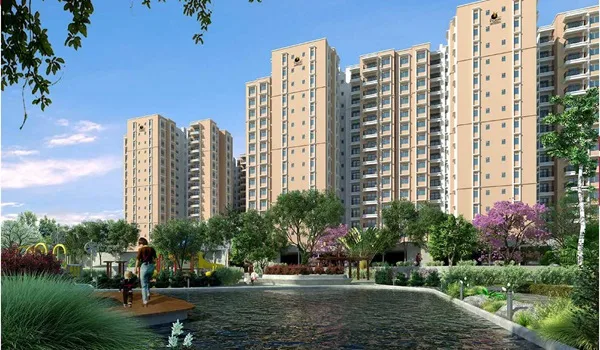
If you are on the buying side — entering the Hoskote market now — this guide is relevant in two ways. First, properties you buy today (on or after 23 July 2024) will be subject to 12.5% LTCG without indexation when you eventually sell. Factor this into your hold-and-exit calculations. Second, if the seller of a resale property you are buying has a capital gains exposure, it does not affect your purchase directly, but you need to be aware of your TDS obligation under Section 194IA if the price is ₹50 lakh or above. Prestige Hoskote is a branded new-launch project from Prestige Group, so a direct purchase here does not involve a resale seller's capital gains issue — the developer is the counterparty. If you would like to understand the full cost of buying at Prestige Hoskote including GST, stamp duty and registration, our team can walk you through the numbers — book a site visit to get started.
Frequently Asked Questions
1. What is the capital gains tax rate on selling a residential property in Karnataka in 2026?
If held more than 24 months, the gain is LTCG taxed at 12.5% without indexation (properties bought on or after 23 July 2024); for earlier purchases you may choose 12.5% or 20% with indexation, whichever is lower. If held 24 months or less, STCG applies at your income-tax slab rate (typically 20–30%).
2. What did the 2024 Union Budget change about capital gains on property?
Budget 2024-25 (23 July 2024) cut the LTCG rate from 20% with indexation to 12.5% without indexation for properties purchased on or after that date. For earlier purchases, a grandfathering clause lets you choose whichever method — 12.5% without indexation or 20% with indexation — gives the lower tax.
3. Can I save capital gains tax by reinvesting in another property after selling in Hoskote?
Yes — under Section 54, reinvest the LTCG amount (not the full sale price) in one residential property within two years of sale (purchase) or three years (construction) and the reinvested gains are fully exempt. Deposit unused gains in a Capital Gains Account Scheme before your ITR deadline if the new property is not yet bought.
4. What is Section 54EC and how does the bond route work for property sellers in Hoskote?
Section 54EC lets you invest LTCG in NHAI or REC bonds within six months of the sale — up to ₹50 lakh — with a five-year lock-in; the invested amount is exempt from LTCG. Interest earned on the bonds is taxable at slab rate.
5. What is the short-term capital gains tax on property sold within 24 months in Hoskote?
If sold within 24 months, the profit is STCG and is taxed at your income-tax slab rate (typically 20–30% plus surcharge and cess) — no indexation or Section 54/54EC exemptions apply.
6. Does the buyer or seller pay TDS when a property is sold in Hoskote?
The buyer deducts TDS at 1% of the sale value under Section 194IA if the transaction is ₹50 lakh or more, and deposits it via Form 26QB; the seller gets credit for this TDS in their income-tax return.
Prestige Hoskote Blog