Best Time to Buy an Apartment in Hoskote 2026

"When should I buy?" is a different question from "should I buy in Hoskote?" — and it deserves its own honest answer. This page is not about whether the town is a good area, nor about which stage or floor plan to pick; it is purely about timing. There are five real levers a Hoskote buyer weighs in 2026: how early in a project's life you enter, where you fall in the calendar, where the interest-rate cycle sits, how much local price momentum is still ahead, and — the quiet one that beats all the others — whether your own finances are actually ready. Along the NH-75 (Old Madras Road) corridor on Bengaluru's eastern edge, with KIADB employment nearby and a faster run toward Whitefield than the interior pockets, each of those levers pulls in a slightly different direction, and this guide walks through all of them so you can time your purchase with your eyes open.
A quick orientation on prices first, because timing is really a question about price. As an indicative snapshot as of June 2026, branded gated launches along the NH-75 and Dalasagere belt sit around ₹6,000 to ₹7,500 per sq ft, ready resale in the Hoskote town core around ₹5,000 to ₹6,500 per sq ft, and the KIADB Industrial Area belt lower, broadly ₹4,500 to ₹5,800 per sq ft. Those bands move with the stage of a project, the season, and the wider rate cycle — which is exactly what the levers below are about.
The Launch-Stage Price Ladder: Buy Early, Pay Less
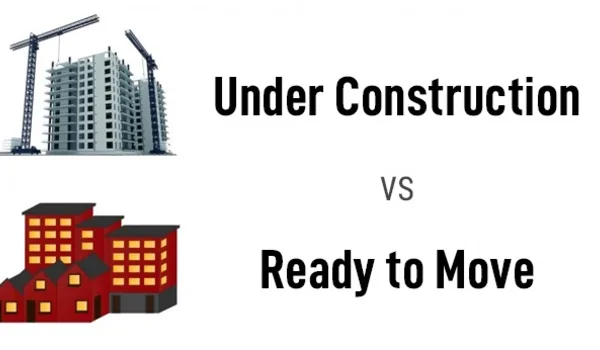
The single biggest timing lever in a new-project market like Hoskote's is how early in a project's life you enter. Prices climb a predictable ladder: pre-launch is the cheapest rung, launch and early under-construction sit a step above, and an OC-ready or ready-to-move home is dearest. A developer prices low at pre-launch to raise early demand and funding, then lifts the rate at each construction milestone as risk falls and the building becomes visible. Buying earlier is therefore the classic "best price" timing, and on a branded belt where launches run ₹6,000 to ₹7,500 per sq ft, the gap between the first pre-launch rung and the final ready rate is real money.
The honest trade-off is that the early rungs cost you time and carry risk. A pre-launch or under-construction buy means a construction wait of a few years and the possibility of delay, so the discount is compensation for that wait rather than a free lunch. An OC-ready home flips this: you pay the top of the ladder but you get zero wait, a finished product you can inspect, and no completion risk. The right rung depends on whether your priority is the lowest price or the fastest, safest move-in — and either way, verify the project's registration on the K-RERA portal before you commit at any stage.
Calendar Timing: Festive, Year-End and Financial-Year-End Windows
Layered on top of the launch ladder is a calendar rhythm to when developers are keenest to discount. Festive windows are the most visible: the run-up to Ugadi in spring and the Dasara-to-Diwali stretch in autumn are traditional home-buying seasons in Karnataka, and builders time offers, waived charges and free upgrades to catch that demand. A second window is the developer's financial-year-end from January to March, when sales teams push hard to hit annual targets and are more willing to negotiate to close a deal before the books shut. A third is plain year-end inventory clearing, when a builder wants to move unsold units off the sheet.
The realistic caveat is that these offers are usually sweeteners rather than deep cuts to the base rate — a waived floor-rise charge, a stamp-duty or GST assist, a modular kitchen thrown in, or a softer payment plan, more often than a slashed per-square-foot price. That still adds up, but only if you measure it correctly: take any festive or year-end offer and compare it against a normal cost sheet for a comparable unit in the same pocket, so you can see the true saving rather than the headline. Timed well, the festive and financial-year-end windows are when your negotiating hand is strongest.
Interest-Rate Timing: The RBI Cycle and Your EMI
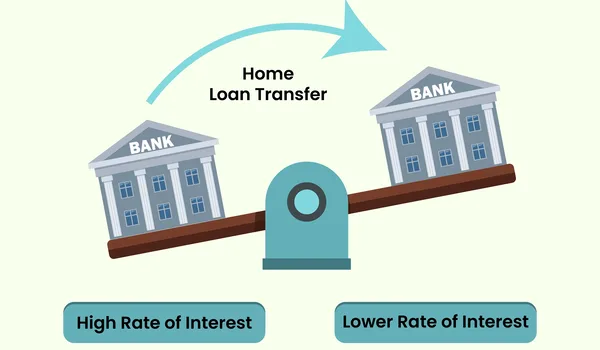
For most buyers the loan, not the sticker price, is the real cost, so the interest-rate cycle is a timing lever worth understanding. Home-loan rates are linked to the RBI repo rate, and because most floating-rate home loans reset with it, the rate at which you borrow flows straight through to your monthly EMI and to the total interest paid across the life of the loan. Buying when rates are softer therefore stretches the same income further — a lower rate can meaningfully change what you can afford, or shrink the EMI on the flat you already want. The Reserve Bank of India is the authority that sets the policy rate through its cycle, and its published decisions, not rumoured figures, are what to watch.
Two cautions keep this practical. First, do not try to pick the exact bottom of the rate cycle — it is unknowable in advance, and waiting for a perfect number usually costs more in rent and delay than the rate saving is worth. Second, remember that a floating-rate loan is not a permanent sentence: if rates ease after you buy, your EMI can fall with them, and you can refinance to a cheaper lender later. The sensible move is to budget your EMI against the prevailing rate with a little headroom, rather than to hold your whole purchase hostage to the rate outlook.
Local Price-Momentum Timing: Buy Ahead of the Infrastructure
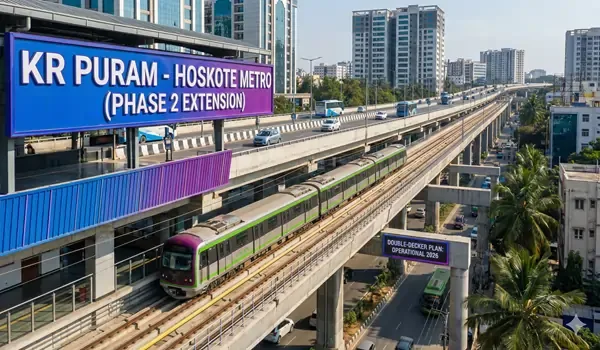
Where you are in a corridor's own growth curve is its own timing lever. Hoskote's NH-75 corridor is early-cycle compared with a mature, largely built-out market like Whitefield, which means more of its price appreciation is still ahead rather than already banked into the rate you pay. The appreciation-timing argument is to buy ahead of infrastructure milestones rather than after them: upgrades to NH-75 (Old Madras Road), the proposed STRR (Satellite Town Ring Road) that would intersect the corridor, and a proposed metro extension toward the east are the kind of catalysts that tend to lift values once they land. Buying near Budigere Cross or the Dalasagere belt today, before those milestones complete, is the classic early-mover play.
The hedge matters as much as the thesis. Infrastructure timelines slip, and proposed links can move or change scope, so treat metro, STRR and highway timelines as possibilities to buy ahead of, not guarantees to bank on. The measured way to use this lever is to buy a unit that stands on its own merits — connectivity to Whitefield, KIADB employment access, sound approvals — so that any infrastructure upside is a bonus rather than the whole investment case. Early-cycle timing rewards patience, but only when the underlying purchase is already sound.
Personal-Readiness Timing: The Honest Core
Here is the lever that outranks all the others: the real best time to buy is when your own finances are ready, not when the market lines up perfectly. That means a stable, documented income; a home-loan pre-approval in hand so you know your true budget rather than a hopeful one; roughly a 20% down payment saved, plus a buffer for stamp duty, registration and interiors; and low other EMIs so the new loan sits comfortably within your income. When those boxes are ticked, you are in a position to act decisively on a good rung of the ladder or a genuine festive offer — which is what actually captures a timing edge.
The reason this beats market timing is simple and worth saying plainly: a mistimed purchase on shaky finances is far riskier than missing a market-timing edge. Stretch beyond your means to catch a pre-launch price or a festive sweetener, and a delayed possession, a rate rise or a job wobble can turn a "good deal" into distress. If your finances are not yet ready, closing that gap — building the down payment, clearing other EMIs, securing pre-approval — is a better use of the next few months than trying to outguess the market. Get ready first; the right time follows.
Timing Levers at a Glance
| Timing lever | Best moment to act | What it saves / gains | Trade-off |
|---|---|---|---|
| Launch-stage ladder | Pre-launch / early under-construction | Lowest entry price on the ladder | Construction wait and delay risk |
| Calendar / festive | Ugadi, Dasara–Diwali, Jan–Mar year-end | Waived charges, upgrades, flexible plans | Sweeteners, not deep base-rate cuts |
| Interest-rate cycle | When RBI repo rate is softer | Lower EMI, better affordability | Cannot time the exact bottom |
| Local price momentum | Ahead of NH-75 / STRR / metro milestones | Early-cycle appreciation upside | Infrastructure timelines can slip |
| Personal readiness | When income, down payment & pre-approval are set | Ability to act safely on any edge | Needs discipline and saving time |
Prices indicative, as of June 2026 — verify the current cost sheet with the developer.
Timing in Practice: Five Hoskote Projects
Timing is easiest to picture through real projects at different rungs of the ladder. The five below span the range — the earliest-entry pre-launch play, mid-stage under-construction options, a buy-now established community with no wait, and a value pick — each framed by the timing decision it represents so you can see which moment matches your priority.
Prestige Hoskote
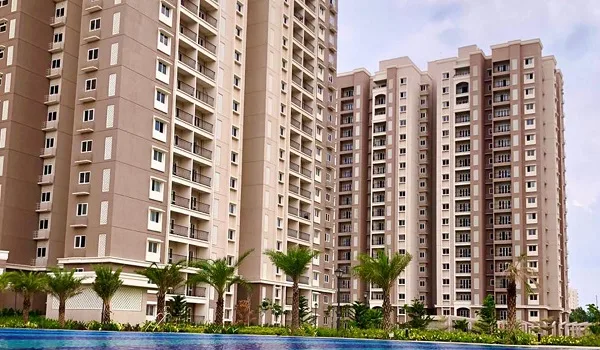
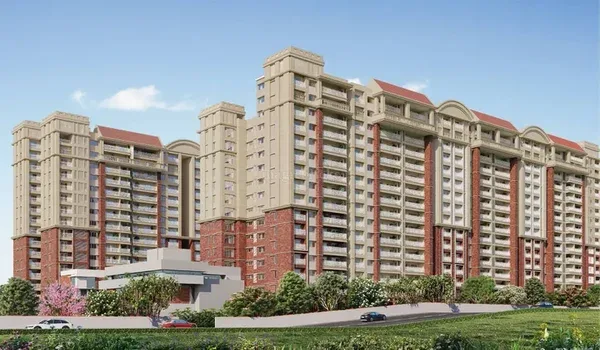
Prestige Hoskote represents the earliest-entry timing play — a pre-launch gated township with 2, 3 and 4 BHK homes from Prestige Group on the Dalasagere belt off NH-75. In timing terms it sits on the cheapest rung of the launch ladder, so early buyers stand to enter at the lowest price before construction milestones lift the rate. The honest trade-off is the wait and the risk that come with pre-launch: registration is still in process, so confirm the number once published and be ready for a construction timeline rather than a ready home. First-hand buyers can review the floor plans, price and location before visiting.
Sobha One World

Sobha One World illustrates launch-stage timing on the connectivity-led NH-75 belt, where you enter after pre-launch but while the project is still building — a middle rung that trades a slightly higher price for a shorter wait and more visibility than a pre-launch buy. Its differentiator is Sobha's in-house build reputation, which some buyers weigh heavily on finish and detailing. The honest timing trade-off is that branded launch pricing tends to sit near the top of the local band and moves up with each phase, so the earlier in its launch cycle you act, the better the rate; confirm the current phase and cost sheet, since these shift as construction progresses.
Godrej Parkshire

Godrej Parkshire is the under-construction, mid-stage timing example — 2, 3 and 4 BHK homes of roughly 1,150 to 1,750 sq ft, bought while the towers are rising rather than at pre-launch or after completion. This rung suits a buyer who wants a better price than a ready home carries but a shorter, more visible wait than a pre-launch commitment, with construction-linked payments that spread the outflow. Its differentiator is the Godrej brand's design-led, greener community planning. The honest trade-off is the same as any under-construction buy: you are purchasing a future community, so possession timing and the surrounding micro-neighbourhood are still firming up.
Confident Cygnus

Confident Cygnus, from the Confident Group, sits at the buy-now, no-wait end of the timing ladder — an established, town-side gated community with existing residents rather than a fresh launch. In timing terms it is the opposite of a pre-launch: you pay the dearer, top-of-ladder rate but you get zero construction wait, a finished product you can inspect, and no completion risk, and you can often move in or let out immediately. The honest trade-off is that a ready, established community reflects its build era in amenities and finishes, and availability depends on owners choosing to sell rather than on a live launch inventory.
Sowparnika Purple Rose
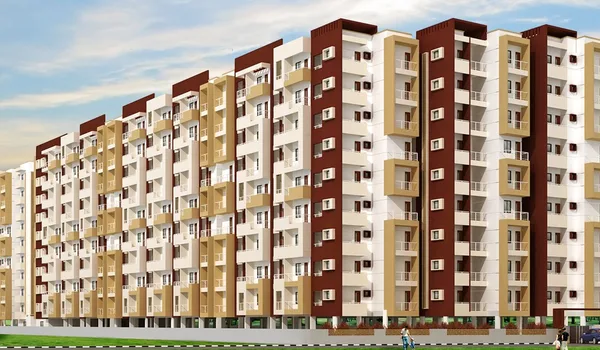
Sowparnika Purple Rose is the value-timing pick, and its differentiator is accessible pricing — Sowparnika typically targets the affordable and mid segment, which lowers the readiness bar and lets a buyer act sooner without stretching finances to reach the branded belt. In timing terms, a lower ticket means the personal-readiness lever is easier to satisfy, so the "right time" can arrive earlier for a budget or first-time buyer here than on a premium project. The honest trade-off is a lighter amenity and finish level than the top-tier townships; confirm the current availability, khata and approval status before you commit.
So When Should You Buy?
Pull the levers together and the answer is layered rather than a single date. The market-side timing is straightforward: enter as early on the launch ladder as your appetite for a construction wait allows, act inside the festive or January-to-March financial-year-end windows when developers discount hardest, factor the prevailing RBI-linked rate into your EMI budget without trying to pick the exact bottom, and buy ahead of NH-75, STRR and metro milestones while treating those timelines as hedged possibilities. Each of those tilts the price in your favour, but none of them is decisive on its own.
The decisive lever is you. The genuine best time to buy an apartment in Hoskote is when your income is stable, your loan is pre-approved, your down payment and costs are saved, and your other EMIs are low — because only then can you safely act on any of the market edges above. If that describes you, the fastest way to convert a timing edge into a purchase is to stand on the corridor and compare live cost sheets in person, so if you would like to weigh the rungs and the current offers with our team, we can help you book a site visit before you decide.
Frequently Asked Questions
1. When is the best time to buy an apartment in Hoskote in 2026?
The honest answer is that the best time is when your own finances are ready — stable income, a home-loan pre-approval in hand, roughly 20% down payment plus registration and other costs saved, and low other EMIs. On top of that, buying earlier in a project's life (pre-launch or early under-construction) usually gets the lowest price, and festive-season and financial-year-end windows are when developers are keenest to discount. No single calendar date beats being financially prepared for the specific unit you want.
2. Is it cheaper to buy at pre-launch or after a project is ready in Hoskote?
Pre-launch is almost always the cheapest entry point and OC-ready is the dearest, with under-construction sitting in between. Buying early trades a lower price for a construction wait and delay risk, while buying an OC-ready or ready-to-move home means you pay a premium but move in with zero wait and no completion risk. In Hoskote, a pre-launch township like Prestige Hoskote represents the earliest-entry timing play, while an established community like Confident Cygnus is the buy-now, no-wait end of the same ladder.
3. Do festive-season and year-end offers really lower Hoskote apartment prices?
They can, though usually as sweeteners rather than deep cuts to the base rate. Developers are keenest to close deals around festivals such as Ugadi and Dasara or Diwali, during the January to March financial-year-end push toward annual targets, and while clearing year-end inventory — so this is when you are most likely to see waived charges, free upgrades, GST or stamp-duty assistance and flexible payment plans. Always compare any festive offer against a normal cost sheet for a comparable unit so you know the real saving.
4. How do interest rates affect the right time to buy a flat in Hoskote?
Home-loan rates are linked to the RBI repo rate, and since most floating-rate loans move with it, buying when rates are softer lowers your EMI and improves affordability over the life of the loan. The Reserve Bank of India is the authority that sets the policy rate through its cycle, so watch its published decisions rather than any rumoured number. Do not try to perfectly time the bottom of the rate cycle — factor the prevailing rate into your EMI budget, and remember you can refinance later if rates fall.
5. Should I buy in Hoskote now or wait for prices to rise or fall?
Hoskote's NH-75 corridor is early-cycle compared with mature markets like Whitefield, so the appreciation-timing argument is to buy ahead of infrastructure milestones — NH-75 (Old Madras Road) upgrades, the proposed STRR and a proposed metro extension — rather than after they complete and are priced in. That said, infrastructure timelines slip, so treat these as hedged possibilities, not guarantees. If the unit fits your budget and your finances are ready, waiting to perfectly time the market usually costs more in rent and lost entry than it saves.
6. How do I know if my finances are ready to buy an apartment in Hoskote?
Use a short readiness check: a stable, documented income; a home-loan pre-approval so you know your real budget; roughly 20% of the price saved for down payment plus a buffer for stamp duty, registration and interiors; and low existing EMIs so the new loan sits comfortably within your income. If those boxes are ticked, you are in a position to act on a good price or offer. If they are not, closing that gap is a better use of time than trying to time the market, because a mistimed purchase on shaky finances is riskier than missing a market-timing edge.
Prestige Hoskote Blog