Carpet Area vs Built-Up vs Super Built-Up: Buyer's Guide for Hoskote 2026
When you browse apartments in Hoskote, the area figures quoted by different developers are rarely the same thing. One brochure says 1,350 sq ft; another says 950 sq ft carpet. The prices per sq ft look wildly different, until you realise they are measuring different things. Carpet area, built-up area and super built-up area are three distinct measurements of the same apartment, and understanding which one a developer is quoting is the foundation of any fair comparison. This guide explains each term, the RERA legal standard that now governs all new sales, how to calculate the loading factor so you can compare projects on an equal basis, and what to look for in the sale agreement before you sign.
The Three Area Terms: What Each One Measures
1. Carpet Area: The RERA Standard
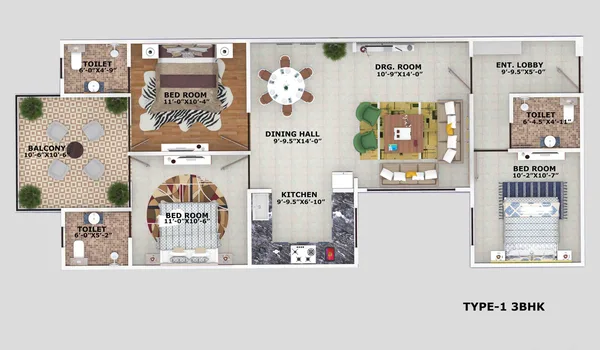
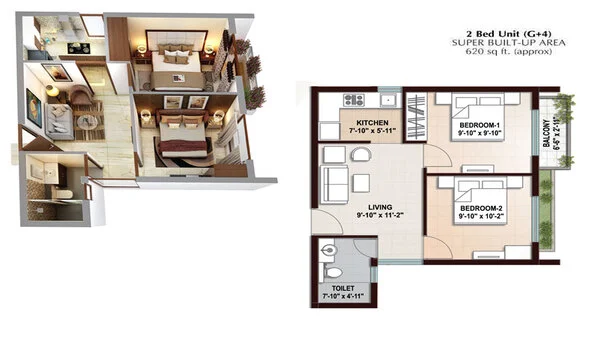
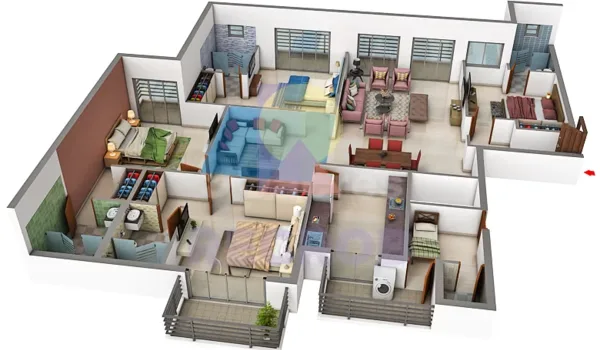
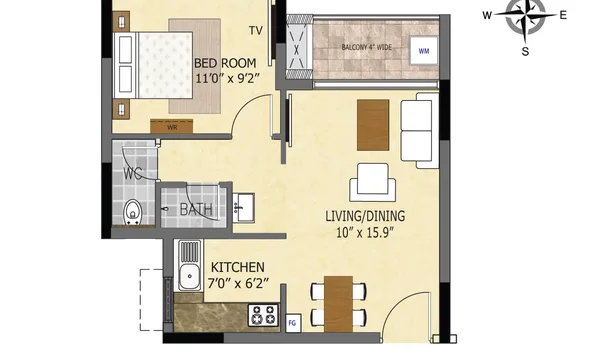
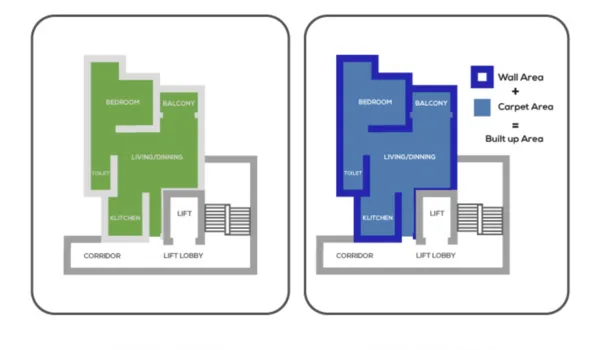
Carpet area is the net usable floor area inside your apartment, the space where you can actually place furniture and move around. Under the Real Estate (Regulation and Development) Act 2016, carpet area is legally defined as the net usable floor area of an apartment, excluding the area covered by external walls, areas under service shafts, the exclusive balcony or verandah area, and open terrace area. It includes the floor area covered by internal partition walls.
In plain terms: it is the floor space that is entirely yours, the rooms, the kitchen, the bathrooms and the corridors inside the flat. It excludes the structural walls on the outside, and it excludes your balcony (balcony is measured and charged separately). RERA mandates that all RERA-registered projects quote carpet area in the allotment letter and the sale agreement. If a developer is RERA-registered but cannot give you the carpet area figure, that is a gap in their disclosure, ask for it explicitly.
2. Built-Up Area: Carpet Plus the Walls
Built-up area is carpet area plus the area occupied by the walls enclosing the apartment, the external walls (shared with the corridor, adjacent flats or the building exterior) and the internal structural walls (columns and load-bearing walls). Built-up area is typically 10 to 15 percent more than carpet area, depending on the wall thickness and construction system. A flat with 900 sq ft carpet area might have 1,000 to 1,030 sq ft built-up area.
Built-up area is not a RERA-recognised unit of sale. It was more common in the pre-RERA era but is now rarely cited as the primary selling metric by compliant developers. When you encounter it, it usually means the developer is trying to show you a larger number than the carpet area without going all the way to the super built-up figure.
3. Super Built-Up Area: The Legacy Marketing Number
Super built-up area (also called saleable area or undivided share area) adds the buyer's proportionate share of the common areas of the building, lift lobbies, staircases, lifts, corridors, security room, electrical room, garbage room and sometimes a share of the amenities block, to the built-up area. The share is calculated proportionately: if your apartment is 1,000 sq ft built-up in a 100,000 sq ft built-up building with 10,000 sq ft of common areas, your super built-up area includes your 1 percent proportionate share of those 10,000 sq ft (= 100 sq ft), giving 1,100 sq ft super built-up.
Before RERA, super built-up was the default selling metric precisely because it gave the largest area number, and dividing the total unit price by a larger area gave a lower-looking price per sq ft. A buyer comparing a ₹85 lakh apartment quoted at 1,400 sq ft super built-up (₹6,071/sq ft) with a ₹80 lakh apartment quoted at 950 sq ft carpet area (₹8,421/sq ft) might incorrectly conclude the first project is cheaper, when the first has roughly 950 sq ft of actual usable space and the second has 950 sq ft of actual usable space, making them roughly the same but at different sticker prices. RERA ended this practice for registered projects: the sale unit is now carpet area.
Loading Factor: The Number That Tells You How Efficient a Project Is
The loading factor (or efficiency ratio) is the ratio of super built-up area to carpet area. It tells you what percentage of the area you pay for is actually yours versus shared infrastructure.
Formula: Loading factor = Super built-up area / Carpet area
A loading factor of 1.25 means 25 percent of the super built-up area is common area. A loading factor of 1.40 means 40 percent is common area, only 60 percent of the area you "bought" is usable floor space inside your flat. Lower is better for the buyer.
Typical loading factors by project type:
- High-rise towers (above 20 floors) with large lobbies, multiple lifts and full amenity blocks: 1.30 to 1.45
- Mid-rise gated communities (8 to 15 floors) with club and amenity block: 1.22 to 1.35
- Low-rise gated communities (4 to 7 floors) with limited common areas: 1.15 to 1.25
- Older/standalone buildings with minimal common areas: 1.10 to 1.20
A high loading factor is not automatically bad, it may reflect a richer amenity block (clubhouse, swimming pool, large lobby) that adds lifestyle value. The point is that you should know what you are paying for, and compare projects on the same carpet-area basis rather than the super built-up headline number.
How to Compare Projects on a True Per-Sq-Ft Basis
| Project (illustrative) | Quoted Area | Carpet Area | Total Price | Price per sq ft (carpet) |
|---|---|---|---|---|
| Project A (pre-RERA style) | 1,350 sq ft super built-up | ~970 sq ft | ₹85 lakh | ₹8,763/sq ft |
| Project B (RERA carpet) | 980 sq ft carpet | 980 sq ft | ₹82 lakh | ₹8,367/sq ft |
| Project C (RERA carpet) | 950 sq ft carpet | 950 sq ft | ₹75 lakh | ₹7,895/sq ft |
Figures illustrative only, not actual Hoskote project prices.
The table illustrates why quoting super built-up "1,350 sq ft at ₹6,296/sq ft" for Project A looks cheaper than Project B's "980 sq ft at ₹8,367/sq ft", but when both are measured on carpet area, Project B is actually more economical. Always ask for the carpet area and divide the total price by it. That is the only fair comparison.
What the RERA Sale Agreement Must Disclose
Under RERA, the allotment letter and the agreement for sale (AoS) must both specify the carpet area as defined under the Act. The agreement cannot use super built-up area as the unit of pricing. The K-RERA portal (rera.karnataka.gov.in) shows the registered carpet area for each unit type in a RERA-registered project, you can verify this independently before signing. If the carpet area stated in your sale agreement differs by more than 3 percent from the registered figure, you have the right to withdraw and receive a full refund of all amounts paid plus interest.
For pre-launch projects like those in Hoskote's current pipeline, the RERA registration may be in process. In such cases, ask the developer for the carpet area figure per unit type and the expected RERA registration timeline. Do not sign an agreement to sell that is silent on carpet area, it is a non-negotiable disclosure under the law.
Balcony: Excluded from Carpet Area, Charged Separately
The RERA definition explicitly excludes the exclusive balcony or verandah area from carpet area. Developers typically charge for the balcony at a rate lower than the main carpet area rate, often 25 to 50 percent of the carpet area rate, depending on the project. When comparing two apartments where one has a large balcony, ensure you are comparing the carpet areas (which both exclude the balcony) and then separately evaluating the balcony size and its charge. A larger total quoted area in one project may simply reflect a larger balcony, not more liveable floor space inside the flat.
Hoskote Projects: What to Ask About Area Before Buying
Prestige Hoskote
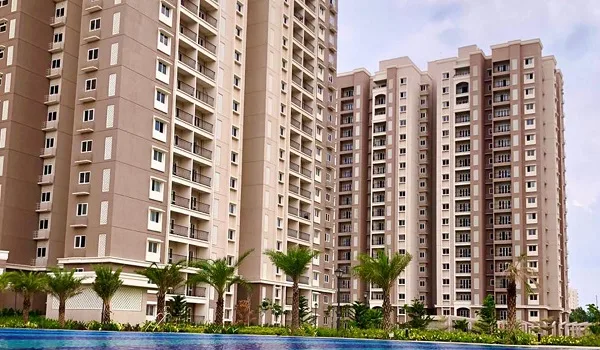
Prestige Hoskote is a pre-launch township by Prestige Group. As with all Prestige projects, the sale agreement will be RERA-compliant once the project is registered, quoting carpet area as the unit of sale. At the pre-launch stage, ask the sales team for the indicative carpet area per configuration, the estimated balcony area, and the expected RERA registration timeline. Do not commit to a booking amount without receiving a written carpet area figure. Review the floor plans and price details and ask for the per-sq-ft rate on carpet area specifically. For location details, check the location page.
Sobha One World
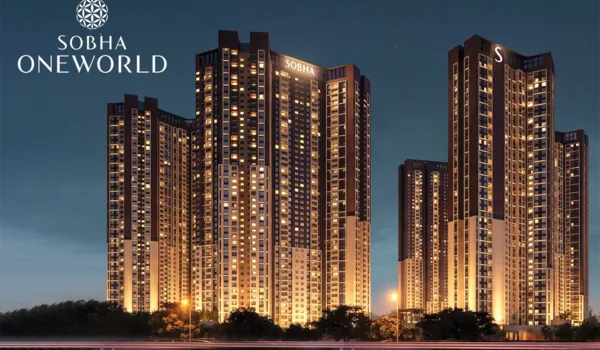
Sobha One World is known for Sobha's in-house construction standards, which tend to produce compact, efficient floor plates with lower loading factors than projects that outsource construction. Sobha routinely publishes carpet area figures in its sales collateral and the loading factor for Sobha projects has historically been in the 1.18 to 1.28 range, depending on tower design and amenity block size. Verify the carpet area for each unit type at the time of purchase and compare it against the total consideration to arrive at your effective per-sq-ft cost on carpet.
Godrej Parkshire
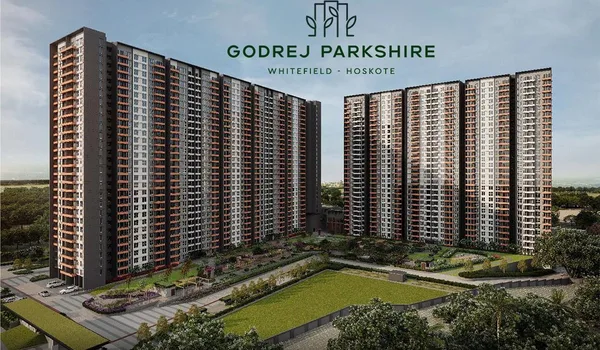
Godrej Parkshire's floor plan disclosures, like other Godrej residential projects, include carpet area as the primary measurement. Godrej Properties is one of the more transparent national developers on area disclosure; their sales teams routinely provide carpet area figures without requiring the buyer to specifically ask. The design-led floor plates typically run a loading factor in the 1.22 to 1.30 range. Confirm the exact carpet area and verify it against the K-RERA registration once the project is registered.
Confident Cygnus
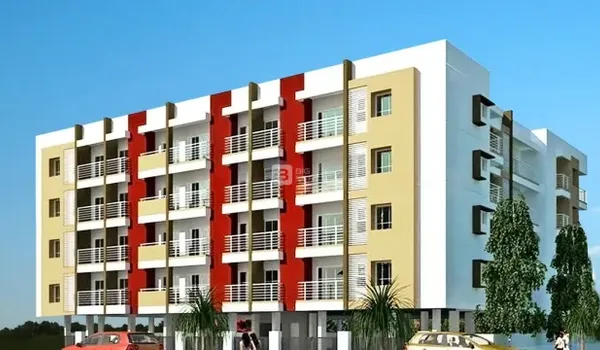
Confident Cygnus is an established, ready community, which means the carpet area and built-up area figures are now fixed and can be verified against the registered sale deed of any unit already sold and on record with the sub-registrar. For a resale buyer at Confident Cygnus, you can check the Schedule of Property in the original sale deed (obtained from the owner or at the sub-registrar's office) to see what carpet area was registered. This makes the area verification simpler than for a pre-launch project where the unit is not yet built.
Sowparnika Purple Rose
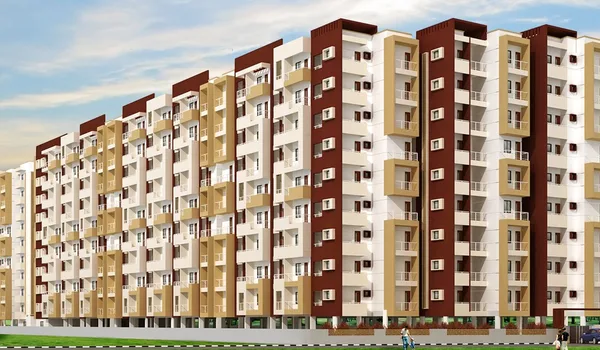
Sowparnika Purple Rose is in the affordable-to-mid segment, where loading factors tend to be lower, fewer amenity blocks and simpler common area design mean more of your purchase price goes to carpet area rather than common infrastructure. For a value buyer, a lower loading factor at a comparable per-sq-ft rate on carpet can mean meaningfully more usable space for the same total price. Ask the Sowparnika sales team for the carpet area in writing and verify that the project is K-RERA registered before committing to a booking amount.
Quick Reference: What to Ask Every Developer Before Signing
- What is the RERA carpet area for my chosen unit type?
- What is the separate balcony area, and at what rate is it charged?
- What is the K-RERA registration number? (Verify at rera.karnataka.gov.in.)
- Is the sale agreement priced on carpet area as required under RERA?
- If the project is pre-launch/RERA-in-process: when will the registration be completed?
- What is the total consideration, and does it include car park, PLC and any other charges beyond the unit price?
Understanding carpet area puts you in control of every price comparison. Once you know the carpet area of each unit you are comparing and divide the total price (including car park and mandatory charges) by it, you can compare any two projects in Hoskote or anywhere in India on the same basis. If you are ready to explore the current offerings, book a site visit at Prestige Hoskote and ask the sales team for the carpet area disclosure before signing anything.
Frequently Asked Questions
1. What is the RERA definition of carpet area?
Under RERA 2016, carpet area is the net usable floor area of the apartment, excluding external walls, service shafts, balcony and open terrace, but including internal partition walls. It is the legally binding area figure in every RERA-compliant sale agreement and can be verified on K-RERA at rera.karnataka.gov.in.
2. What is built-up area and how does it differ from carpet area?
Built-up area is carpet area plus the area occupied by the walls enclosing the apartment, typically 10 to 15% more than carpet area. It is not a RERA-recognised selling unit and is now rarely cited as the primary metric by compliant developers.
3. What is super built-up area and why did developers use it?
Super built-up area adds the buyer's proportionate share of the building's common areas (lobbies, corridors, lifts, amenities) to built-up area. It was used before RERA because it produced the largest number and the lowest-looking price per sq ft. RERA mandates carpet area as the unit of sale for all registered projects.
4. How do I calculate the loading factor and compare the real price per sq ft?
Loading factor = super built-up area divided by carpet area. To compare projects fairly, divide the total unit price by the carpet area in sq ft for each project. That is your true cost per sq ft and the only number that lets you compare apartments across different developers on equal terms.
5. What should the RERA sale agreement say about area?
It must state the carpet area as defined under RERA, the unit price on a carpet-area basis, and the delivery timeline. A variation of more than 3% from the registered carpet area entitles the buyer to withdraw and receive a full refund with interest.
6. Is balcony area included in the RERA carpet area for Hoskote apartments?
No, balcony and verandah area is explicitly excluded from RERA carpet area and is charged separately, usually at 25 to 50% of the carpet-area rate. When comparing apartments, always check the carpet area figure independently of the balcony to make a fair comparison of usable floor space.
Prestige Hoskote Blog